John Scott: Architect
Index
Chapel of Futuna
Futuna Slideshow
Our Lady of Lourdes
St Joseph the Worker
St Joseph's Slideshow
St Canice's
St Mary's
Visitor Centre: Aniwaniwa
Visitor Centre: Waitangi
Maori Battalion Memorial
Martin House
Hokitika Bush House
Details
List of Projects
Biography
Links
Feedback
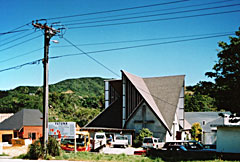
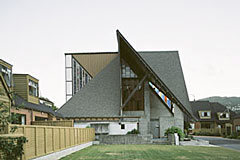
Chapel of Futuna

Friend Street, Karori, Wellington, 1959.

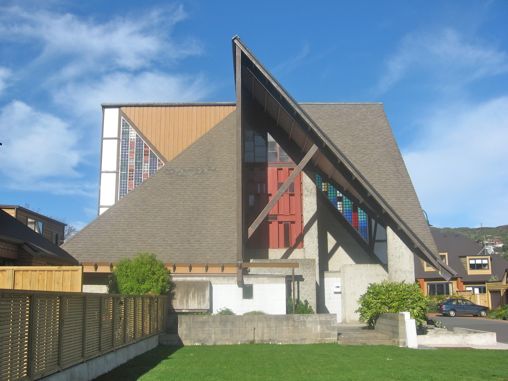
The Chapel of Futuna is arguably the most significant New Zealand building of the 20th Century.

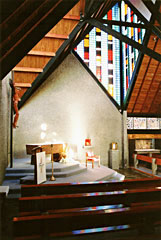
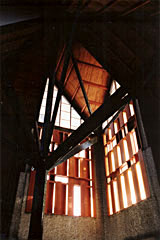
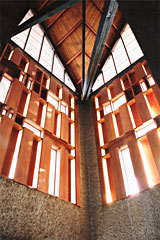
The chapel is a place of reflection and contemplation, of meditation and inspiration. Only a philistine could sit on a pew in the Futuna and not connect with the spirit, the mauri, of the building; the play of light across the walls and floor, the contrasts of material and texture, the perfectly proportioned walls and windows, the human size and intimacy of the spaces, and the chapel’s strong connection with the earth. These qualities don't come from the building’s history, or how much it cost, or even its Christian connections. They come from the quality of the architecture.

In the Futuna you can only marvel at the complexity of the initial idea and the elegance of the solutions to the problems that arose in realising this idea. But not only that, it is also full of wonderful details, the ideas and artwork of others, and the love of the brothers who built it.

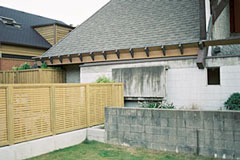
Unfortunately the condition of the chapel has deteriorated over the last ten years. The chapel and surrounding land and buildings were sold to developers in 2000 and some interior fittings were damaged or stolen, including the carved figure of Christ. In 2002 the Wellington City Council moved to protect the chapel, including the interior and surroundings, in its district plan.

The Friends of Futuna Charitable Trust has recently purchased the chapel. The Futuna Trust site tells you how you can help the effort to conserve this vital piece of New Zeland's architectural history.

Craig Martin, 2003-2008

Futuna Location Map

Futuna Slideshow

HISTORY
John Scott was asked to design a retreat chapel for this site in 1958. On presenting his proposal to the society of Mary, the response was "its a gazebo". However, after numerous words of praise for the design from a number of renowned architects, the proposal was agreed upon, and work on site began shortly afterwards.

It commemorates the martyrdom of the St. Peter Chanel on the French Polynesian Island of Futuna, on 28 April, 1841. Futuna Chapel - a retreat centre - needed to be a place for silence and inner renewal. The Chapel was opened on 19 March 1961.

The building was the recipient of a 25 years award from the New Zealand Institute of Architects.

ARCHITECTURE
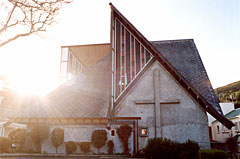
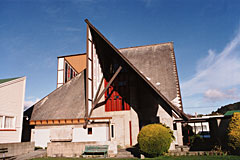
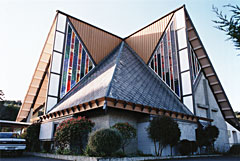
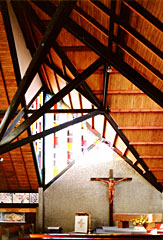
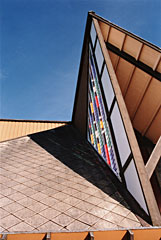
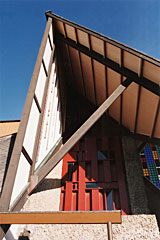
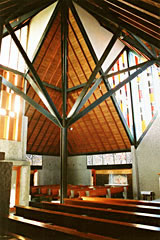
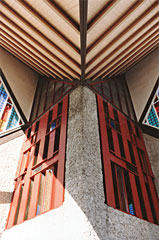
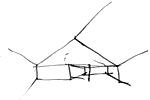
Futuna Chapel is a brilliant essay in geometry, the use of materials and the relation of old to new. The plan is square, the roof ridge is a Greek cross connecting the central point with the middle of each side. The roofs between the arms of the cross form diagonal hips and valleys. All materials are treated as naturally as possible.

Futuna Chapel is a modernist building. It holds the geometrical and formal influences of the modern movement, but Scott was also intuitively sensitive to its place and context. The use of coloured glass by artist, Jim Allen, raises the building to one of great beauty when coloured light filters across the sacramental dais.

The building also gains from Scott's Maori heritage. With its large centre pole, its sharply sloping eaves, its modest almost deferential entrance, the building has its antecedents on the marae and in Maori meeting houses. Its use as a place of contemplation and the manner in which an appropriate atmosphere is achieved further reflect a spiritual dimension influenced by the marae.

Extract from Wellington City Council Heritage Building Inventory

© 2003 - 2009 e-mail webmaster@johnscott.net.nz